How to Mediate Conflict Between Employees: Role Play
Learn how to mediate employee conflicts using role play. Improve communication, build empathy, and resolve workplace issues quickly with this practical guide.

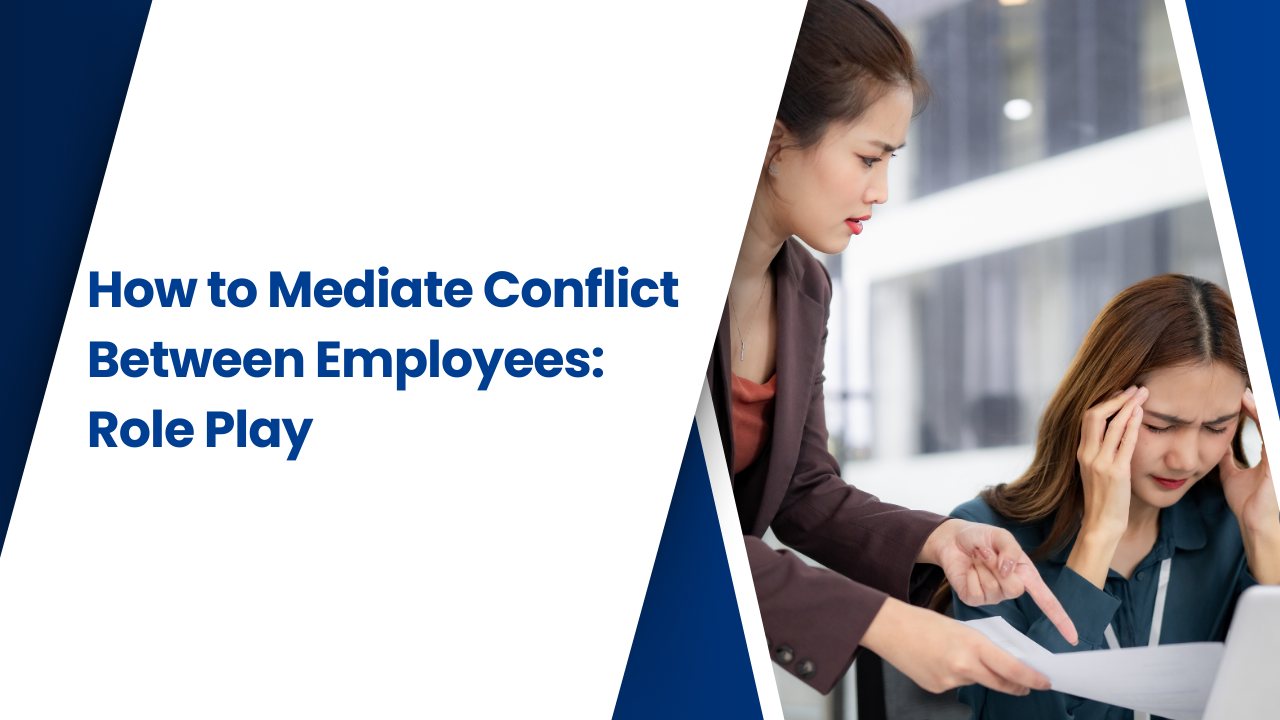
Employee conflicts are common in every workplace, but the way leaders handle them can determine whether the team becomes stronger or more divided. One of the most effective ways to resolve disputes is through structured mediation, and a powerful tool within this process is role play. Role play allows employees to step into each other’s perspectives and understand the root cause of the problem more clearly. This leads to faster, fairer, and long-lasting resolutions.
Why Role Play Works in Employee Mediation
Many conflicts continue because employees are stuck in their own point of view. They focus on how they feel wronged, while ignoring how their actions are perceived by others. Role play helps break this barrier by allowing each party to temporarily take on the other person’s role.
This simple shift creates empathy, reduces emotional tension, and encourages solutions that benefit both sides. When combined with a structured mediation session, role play can transform a heated disagreement into a meaningful conversation.
Step-by-Step Guide to Mediating Employee Conflict
1. Start With a Private Conversation
Before mediation begins, meet each employee individually. Listen carefully, gather facts, and ensure both sides understand the purpose of mediation: resolution, not blame.
2. Set Ground Rules
At the start of the joint session, establish a safe environment. Define rules like:
- Speak respectfully
- Do not interrupt
- Focus on solutions
- Be honest and open
This builds trust from the start.
3. Explain the Role Play Exercise
Let employees know they will temporarily switch roles. This is not to embarrass anyone, but to help each person understand the other’s viewpoint.
4. Begin the Role Play Scenario
Ask each employee to:
- Describe the situation as if they were the other person
- Express the concerns, frustrations, and goals of the opposite side
- Act out the scenario in a calm, constructive way
This reveals misunderstandings, assumptions, and hidden emotions.
5. Discuss Insights
After the role play, ask:
- What did you learn about each other?
- What did you feel during the exercise?
- What solutions now seem fair to both sides?
This step often leads to breakthroughs.
6. Agree on Action Steps
End the session with a clear agreement that includes:
- Responsibilities for each person
- Behavior expectations
- Follow-up meetings
This ensures the conflict truly ends—not just the argument.
Conclusion
Role play is a powerful mediation tool that helps employees understand each other better, communicate respectfully, and find solutions that work for everyone. Using this method builds stronger teams and a healthier workplace culture.
Promotional Line: Need help resolving employee conflicts in Florida? Schedule a professional mediation consultation with us for fast, fair workplace solutions.Book Now!