
The Art of Peaceful Resolution: Mediation Techniques Explained
Conflict is uncomfortable.
Whether it’s a business disagreement, a partnership dispute, a contract issue, or a family

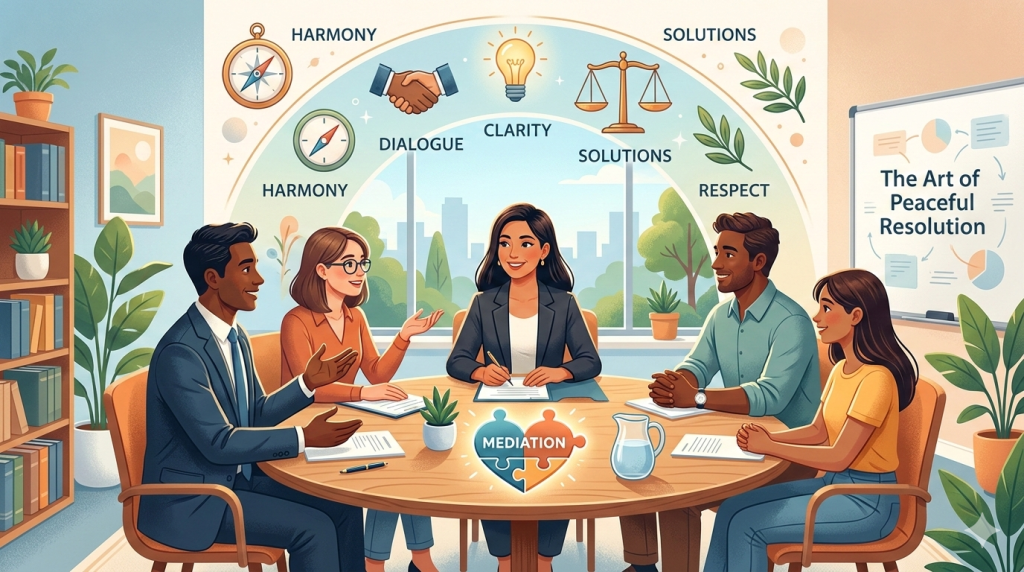
Conflict is uncomfortable.
Whether it’s a business disagreement, a partnership dispute, a contract issue, or a family matter — tension drains energy, time, and money.
Most people think their only option is court. But courtroom battles often turn disagreements into full-blown wars.
There’s a better way.
Mediation is not about winning or losing. It’s about finding clarity, protecting relationships, and reaching solutions that actually work for both sides.
What Is Mediation — Really?
Mediation is a structured yet flexible process where a neutral third party (the mediator) helps disputing parties communicate, understand each other’s concerns, and negotiate a mutually acceptable agreement.
Unlike litigation:
- It’s confidential
- It’s faster
- It’s cost-effective
- And most importantly — it preserves dignity
The Core Mediation Techniques That Make It Work
1. Active Listening (The Game-Changer)
Most conflicts escalate because people feel unheard.
A skilled mediator listens — not to respond — but to understand.
Active listening involves:
- Reflecting back what someone said
- Clarifying emotions behind statements
- Removing misunderstandings
2. Reframing Negative Statements
In heated disputes, words can be sharp:
“You never respect the agreement!”
“You always ignore my concerns!”
A mediator gently reframes those statements into neutral language:
“It sounds like consistency and communication are important to you.”
Reframing reduces emotional charge while keeping the core issue intact.
3. Identifying Interests (Not Just Positions)
One party may say:
“I want $50,000.”
But why?
- Is it about financial recovery?
- Reputation?
- Security?
- A sense of fairness?
4. Creating a Safe Environment
People won’t negotiate honestly if they feel attacked.
A mediator ensures:
- Equal speaking time
- Respectful tone
- Confidential discussions
- Emotional safety
5. Private Caucus (When Needed)
Sometimes parties need space.
A mediator may hold private sessions (called caucuses) to:
- Explore settlement flexibility
- Address emotional barriers
- Reality-test expectations
6. Reality Testing
When emotions run high, expectations can become unrealistic.
A mediator gently asks:
- “What might happen if this goes to court?”
- “How long would litigation take?”
- “What are the costs involved?”
7. Collaborative Problem Solving
Instead of:
“You vs. Me”
Mediation becomes:
“Us vs. The Problem”
The mediator encourages brainstorming:
- Multiple settlement options
- Flexible payment terms
- Revised agreements
- Future safeguards
Why Mediation Works So Well
Because control stays with the parties.
A judge makes decisions for you.
A mediator helps you make decisions for yourselves.
That difference changes everything.
Mediation protects:
- Business relationships
- Professional reputation
- Emotional wellbeing
- Time and money
When Is Mediation the Right Choice?
Mediation is especially effective for:
- Business disputes
- Contract disagreements
- Partnership conflicts
- Insurance claims
- Property damage disputes
- Family matters
The Human Side of Resolution
Behind every dispute are people.
And behind every strong position is a concern, fear, or frustration.
Mediation acknowledges the human side.
It doesn’t ignore emotion — it manages it constructively.
That’s the real art.
Peaceful resolution isn’t a weakness.
It’s maturity, strategy, and smart conflict management.
Final Thoughts
Conflict is unavoidable. Escalation is not.
The art of mediation lies in:
- Listening deeply
- Communicating clearly
- Negotiating fairly
- And focusing on long-term solutions
Frequently Asked Questions (FAQs)
Mediation itself is not binding unless both parties sign a settlement agreement at the end of the process.
Yes. In most cases, arbitration decisions are legally binding and enforceable in court.
Mediation is generally less expensive because it focuses on negotiation rather than a formal hearing process.
Many mediation cases resolve in one day or a few sessions, depending on complexity.
Yes. Many disputes begin with mediation. If no agreement is reached, arbitration can be pursued.