
When people hear the word “dispute,” they often imagine courtrooms, judges, and long legal battles. But many conflicts today are resolved through mediation — a faster, more cost-effective, and far less stressful alternative.
At MRM Mediators & Arbitrators, we’ve seen firsthand how preparation can make or break a mediation session. The truth is, mediation isn’t just about showing up and talking. It’s about showing up prepared.
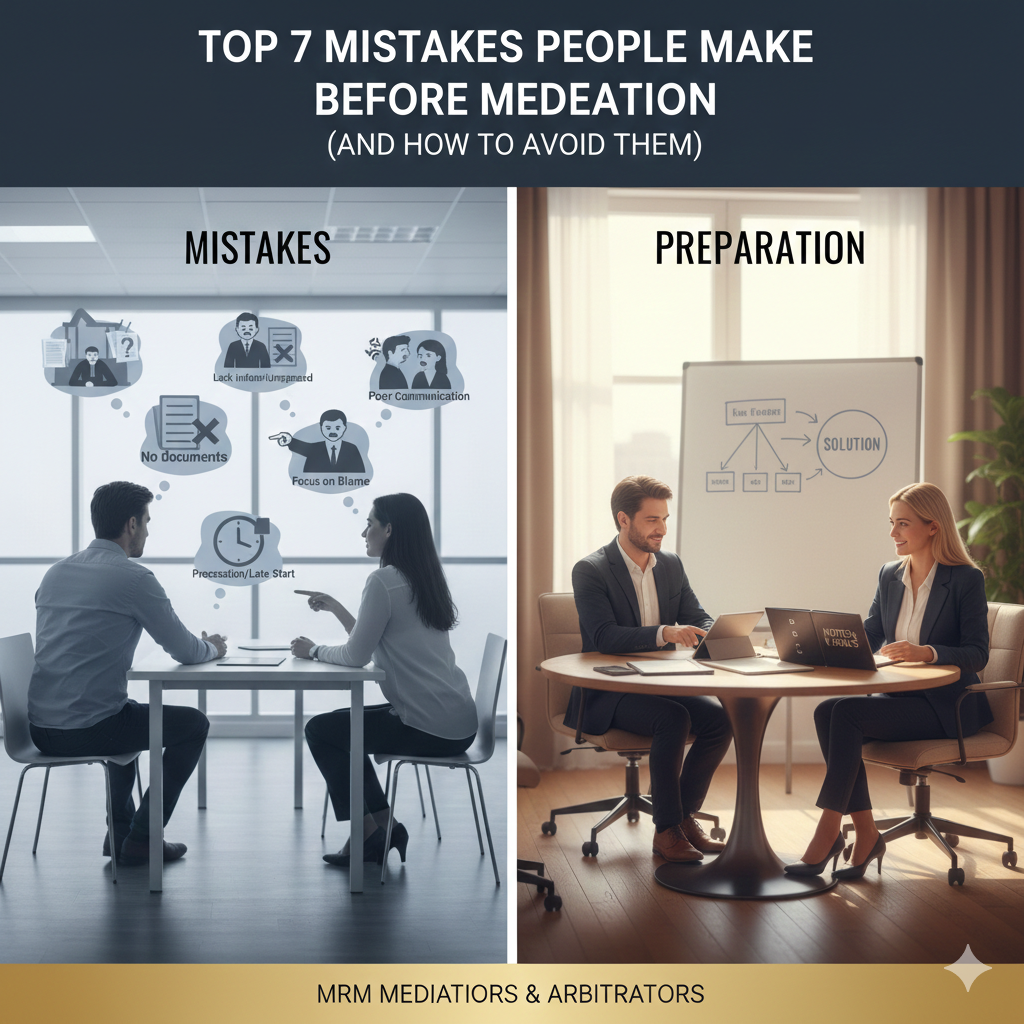
If you’re considering mediation, here are the top 7 mistakes people make before mediation — and how you can avoid them.
1. Treating Mediation Like a Court Trial
One of the biggest mistakes is walking into mediation ready to “win” at all costs.
Mediation isn’t about proving someone wrong. It’s about finding a practical solution that works for everyone involved. If you approach it like a courtroom battle, you’ll miss the opportunity for compromise.
How to avoid it:
Shift your mindset from “How do I win?” to “How do we resolve this?” Be open to discussion rather than confrontation.
2. Not Preparing Key Documents
Imagine trying to explain a business dispute without contracts, emails, or financial records. It weakens your position and wastes valuable time.
How to avoid it:
Bring all relevant documents, including agreements, invoices, correspondence, timelines, and any evidence supporting your position. Organized paperwork builds credibility.
3. Letting Emotions Take Control
Disputes often come with frustration, anger, or disappointment. That’s natural. But letting emotions dominate the session can stall progress.
How to avoid it:
Take time before mediation to cool off. Write down your key points. Focus on solutions, not past grievances. Remember, the goal is resolution — not revenge.
4. Having Unrealistic Expectations
Some people expect to walk away with everything they want. That’s rarely how mediation works.
Compromise is part of the process. If both sides leave slightly uncomfortable but satisfied with the outcome, that’s usually a success.
How to avoid it:
Define your “ideal outcome,” but also identify your “acceptable outcome.” Flexibility is power in mediation.
5. Failing to Understand the Other Side
You may strongly believe you’re right. But mediation works best when you understand the other party’s perspective.
How to avoid it:
Before the session, ask yourself:
- Why does the other side feel justified?
- What are their real concerns?
- What might they be willing to negotiate?
6. Not Listening to the Mediator
A mediator is neutral. Their role is to guide the conversation and help both parties find common ground.
Interrupting, dismissing suggestions, or refusing to engage can derail the process.
How to avoid it:
Trust the process. Listen carefully. Ask questions. The mediator’s experience can help you see solutions you may not have considered.
7. Coming Without Decision-Making Authority
This happens more often than people realize — especially in business disputes. If you don’t have authority to settle, mediation may fail.
How to avoid it:
Ensure that you (or someone present) has full authority to make decisions and agree to settlement terms.
Why Preparation Makes All the Difference
At MRM Mediators & Arbitrators, we’ve helped individuals and businesses resolve disputes efficiently by focusing on clarity, preparation, and constructive dialogue. When parties come prepared, mediation becomes not just a meeting — but a turning point.
Final Thoughts
Mediation works — but only when you come prepared.
Avoiding these common mistakes can dramatically increase your chances of reaching a fair and satisfying resolution. Instead of walking into mediation with tension and uncertainty, walk in with confidence and clarity.
If you’re preparing for mediation and want professional guidance, MRM Mediators & Arbitrators is here to help you navigate the process smoothly and effectively.
Because resolving a dispute shouldn’t feel like starting a war — it should feel like finding a solution.
Frequently Asked Questions (FAQs)
Bring all relevant documents, contracts, emails, financial records, and any evidence related to your dispute. Also, bring notes outlining your key concerns and desired outcomes.
It depends on the complexity of the dispute. Some cases resolve in a few hours, while others may require multiple sessions.
If both parties sign a settlement agreement at the end of mediation, it can become legally binding.
It’s not always required, but having legal guidance can help you understand your rights and evaluate settlement options.
If no agreement is reached, parties may choose arbitration or litigation. However, mediation often narrows down issues even if it doesn’t fully resolve them.