What to Expect in Your First Mediation Session

If you’ve never attended mediation before, it’s completely normal to feel unsure about what will happen.

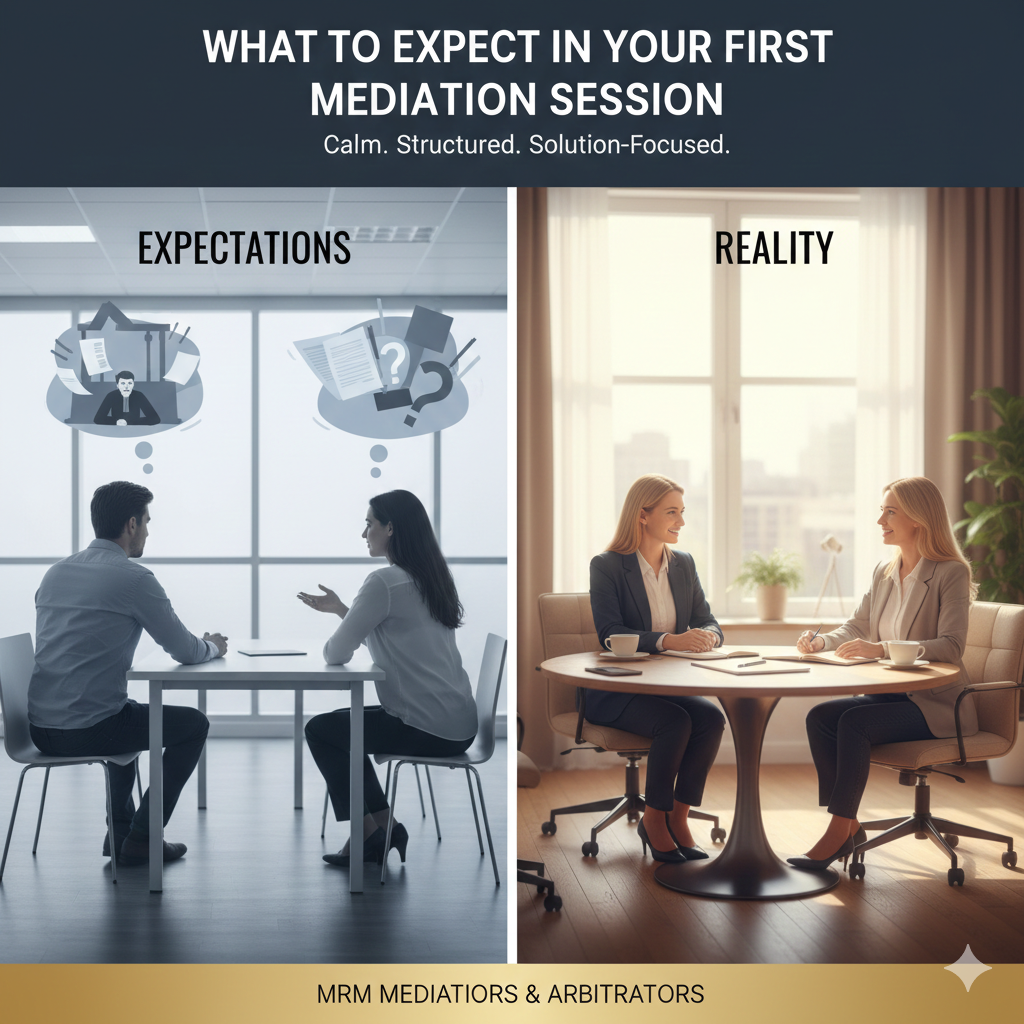
If you’ve never attended mediation before, it’s completely normal to feel unsure about what will happen. Many clients come in wondering: Will it be stressful? Do I have to speak in front of everyone? Is it like going to court?
The good news is this — mediation is designed to be calm, structured, and solution-focused. It’s not a courtroom battle. It’s a guided conversation aimed at resolving disputes efficiently and respectfully.

At MRM Mediators & Arbitrators, we help individuals and businesses across Florida resolve conflicts without the stress and expense of litigation. Here’s what you can expect in your first mediation session.

1. A Neutral and Comfortable Setting

Unlike a courtroom, mediation typically takes place in a private conference room or virtual setting. The environment is structured but comfortable.

The mediator is a neutral third party. Their role is not to take sides or make decisions. Instead, they guide the conversation, help clarify misunderstandings, and explore possible solutions.

2. Opening Statements

The session usually begins with the mediator explaining:

  • The mediation process
  • Ground rules (respect, confidentiality, no interruptions)
  • The goal of reaching a voluntary agreement

    Each party may then briefly share their perspective. This is not about arguing — it’s about being heard.

3. Private Discussions (Caucus Sessions)

After initial discussions, the mediator may separate the parties into different rooms (or breakout rooms if virtual). These are called private caucuses.

This allows:

  • Open and honest conversation
  • Discussion of strengths and weaknesses
  • Exploration of settlement options
  • Reality-checking expectations

4.Negotiation Phase

This is where progress happens.

The mediator will move between parties, carrying offers, counteroffers, and proposals. They may suggest creative solutions you hadn’t considered.

Mediation is flexible. Solutions can include:

  • Payment plans
  • Structured settlements
  • Business adjustments
  • Apologies or policy changes
  • Future agreements

5. Reaching an Agreement (If Settlement Occurs)

If both parties reach common ground, the agreement is put in writing before the session ends. Once signed, it becomes legally binding.

If a full agreement isn’t reached, partial agreements may still narrow the issues — saving time and money if further action is needed.

6. What You Should Bring

Preparation helps mediation succeed. Consider bringing:

  • Relevant contracts or documents
  • Financial records (if applicable)
  • A clear understanding of your goals
  • An open mind

Why Clients Prefer Mediation Over Court

  • Confidential process
  • Faster resolution
  • Lower cost
  • Less emotional strain
  • Greater control over outcomes
  • Preserves business or personal relationships

Final Thoughts

Your first mediation session isn’t something to fear. It’s an opportunity.

An opportunity to speak openly.
An opportunity to resolve conflict efficiently.
An opportunity to move forward without the burden of prolonged litigation.

At MRM Mediators & Arbitrators, our goal is to create a respectful environment where solutions become possible. When handled properly, mediation doesn’t just resolve disputes — it restores clarity and direction.

Frequently Asked Questions (FAQs)

Most sessions last between 2 to 6 hours, depending on the complexity of the dispute.

Mediation itself is voluntary, but once a written agreement is signed, it becomes legally binding.

It’s not required, but having legal guidance can be beneficial, especially in complex business or financial disputes.

If no agreement is reached, you still have the option to pursue litigation or arbitration. Mediation does not remove your legal rights.

Yes. Discussions during mediation are private and generally cannot be used in court later.