
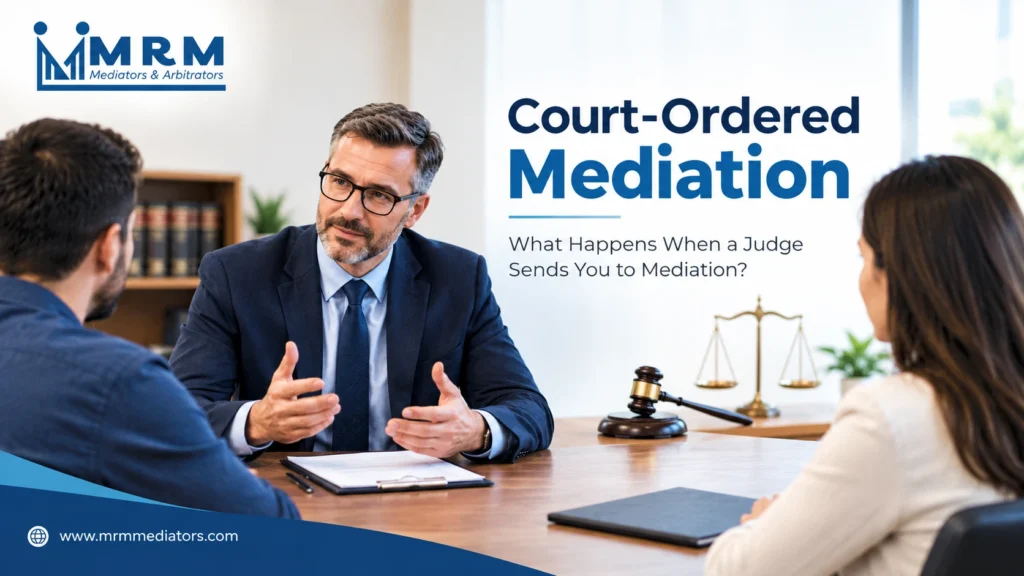
Receiving an order from a judge requiring you to attend court-ordered mediation can feel confusing, especially if you have never been through mediation before. You may wonder what will happen during the session, whether you have to reach an agreement, whether your attorney needs to attend, or what happens if mediation does not resolve the dispute.
The good news is that mediation is generally a structured process designed to give the parties an opportunity to resolve their dispute before spending more time and resources in court.
What Is Court-Ordered Mediation?
Court-ordered mediation is a process in which a judge requires parties involved in a legal dispute to participate in mediation. A neutral mediator facilitates communication between the parties and helps them explore possible solutions.
Unlike a judge, the mediator does not decide who wins or loses the case. Instead, the mediator helps both sides understand the issues, communicate their positions, and consider options for resolving the dispute.
The purpose is not necessarily to force the parties to agree. Rather, it provides an opportunity to reach a mutually acceptable resolution without continuing through every stage of litigation.
Why Would a Judge Order Mediation?
Courts may require mediation because many disputes can potentially be resolved through negotiation rather than a trial.
A trial can involve significant preparation, attorney time, court appearances, and expenses. Mediation gives the parties an opportunity to discuss the dispute in a more controlled setting and determine whether a settlement is possible.
For some parties, sitting down with a neutral mediator can also make it easier to identify practical solutions that may not have been considered during direct negotiations.
What Happens During Court-Ordered Mediation?
The exact procedure can vary depending on the case and the mediator, but the process generally follows a structured format.
1. The Mediation Is Scheduled
Once mediation has been ordered, the parties must arrange a date and time for the session. The court order may provide specific requirements or deadlines that must be followed.
It is important to review the order carefully and make sure the mediation is scheduled within any required timeframe.
2. The Mediator Explains the Process
At the beginning of the session, the mediator explains how mediation will work, including the mediator’s neutral role and the expectations for communication.
The mediator is not acting as a judge and does not represent either party. Their role is to help facilitate productive discussions.
3. Each Side Has an Opportunity to Explain the Dispute
The parties may have an opportunity to explain their perspective, identify the issues they believe need to be resolved, and discuss what they hope to accomplish.
This does not mean that everyone has to agree about what happened. The purpose is to help the mediator understand the dispute and identify areas where meaningful discussion may be possible.
4. The Parties Discuss Possible Solutions
The mediator may help the parties explore different settlement options. Depending on the circumstances, discussions may take place together or separately in private sessions.
The mediator can help identify areas of agreement, clarify misunderstandings, and keep negotiations focused on resolving the dispute.
5. The Case May Settle — or Continue
If the parties reach an agreement, the terms can be documented according to the requirements of the case and applicable law.
If no agreement is reached, the case does not necessarily end. The parties may continue with the court process according to the applicable court schedule and orders.
Do You Have to Reach an Agreement?
Being ordered to attend mediation does not necessarily mean that you are required to settle your case.
The court may require participation in mediation, but the parties may not be able to reach an agreement. A mediator cannot force the parties to accept settlement terms.
The goal is to create a genuine opportunity for resolution while allowing each side to make its own decisions about whether a proposed settlement is acceptable.
Do You Need an Attorney?
Whether you should have an attorney present depends on the circumstances of your case.
If you already have legal representation, your attorney can help you understand the court’s order, prepare for mediation, evaluate settlement proposals, and explain your legal options.
If you are unsure whether you need legal representation, consider discussing your situation with a qualified attorney before mediation. A mediator remains neutral and cannot provide legal advice to either party.
Is Court-Ordered Mediation Confidential?
Confidentiality is an important part of the mediation process, although the specific rules can depend on the applicable law, court rules, and circumstances of the case.
The mediator can explain the confidentiality rules that apply to your mediation before discussions begin. Understanding those rules can help participants communicate more openly during the session.
How Should You Prepare for Mediation?
Preparation can make the mediation more productive.
Before attending, review the court order and understand what issues are being addressed. Gather relevant documents and information, and discuss the case with your attorney if you have one.
It can also be helpful to think about what outcomes you would consider acceptable and where you may have room to negotiate.
Most importantly, come prepared to listen. Mediation is not simply an opportunity to repeat your position. Understanding the other side’s concerns can sometimes reveal possible solutions that were not obvious before the session.
How Long Does Court-Ordered Mediation Take?
The length of mediation depends on the complexity of the dispute, the number of issues involved, and the willingness of the parties to negotiate.
Some matters may be resolved in a relatively short session, while more complicated disputes can require additional time.
The mediator or scheduling office can provide information about the expected duration and scheduling requirements for your particular mediation.
What If Mediation Does Not Resolve the Case?
Not every dispute settles through mediation. If the parties cannot reach an agreement, the case can generally proceed through the court process.
An unsuccessful mediation does not necessarily mean the session was a waste of time. The parties may still gain a clearer understanding of the issues, narrow disagreements, or discover what information is needed before further negotiations.
In some cases, discussions that begin during mediation can also help the parties continue settlement negotiations later.
Why Work With MRM Mediators?
Choosing a neutral and experienced mediator can make a significant difference in how effectively the parties communicate during the process.
MRM Mediators provides professional mediation services designed to help parties address disputes in a structured, respectful, and confidential environment. Our mediators help keep discussions focused while giving each participant an opportunity to be heard.
Whether your case involves a civil dispute, litigation-related matter, or another court-mandated mediation requirement, the goal is to provide a professional setting where meaningful settlement discussions can take place.
Conclusion: Understanding Court-Ordered Mediation
Court-Ordered Mediation can seem intimidating when it is part of an active court case, but understanding the process can make the experience more manageable. The mediator does not decide the dispute for you. Instead, mediation gives the parties an opportunity to communicate, consider settlement options, and potentially resolve the matter without continuing through a lengthy court process.
If a judge has ordered you to participate in mediation, review your court order carefully, prepare your documents and questions, and understand what will be expected from you during the session.
MRM Mediators can help provide a professional and neutral environment for your mediation. If you need to schedule a mediation session, contact MRM Mediators to discuss available dates and the next steps.
FAQs About Court-Ordered Mediation
Is Court-Ordered Mediation mandatory?
If a judge has ordered the parties to attend mediation, participation may be required according to the court’s order. The specific requirements depend on the case and applicable court rules.
Do I have to settle during Court-Ordered Mediation?
No. Attending mediation and reaching a settlement are different things. The parties may negotiate and reach an agreement, but a mediator generally cannot force either side to accept settlement terms.
How long does Court-Ordered Mediation take?
The duration depends on the type and complexity of the dispute. Some sessions may be completed in a few hours, while more complicated cases may require additional time.
Do I need a lawyer for Court-Ordered Mediation?
It depends on your circumstances. If you have an attorney, they can help you prepare and understand your legal options. If you are unsure whether legal representation is appropriate, consider consulting an attorney before mediation.
What happens if mediation does not result in an agreement?
If the parties do not settle, the case may continue through the court process. The next steps depend on the court’s orders, the type of case, and the applicable rules.
Is mediation confidential?
Mediation generally includes confidentiality protections, but the specific rules depend on the applicable law and circumstances. Your mediator can explain the confidentiality requirements that apply to your session.